Hunting for a condo that stays warm in February, cool in July, and keeps utility costs in check? In Portland, that wish list is realistic if you know what to look for and how to vet the building. With strong state incentives and a growing pool of trained installers, you can find a condo that is comfortable, quiet, and easier on your budget.
This guide shows you how to spot real energy performance in listings and during due diligence. You will learn which building features matter most, how Portland’s incentives apply to condos, and what to ask the HOA before you commit. Let’s dive in.
Why efficiency matters in Portland
Portland’s climate plan highlights electrification and weatherization, which supports a steady pipeline of skilled contractors and projects. You benefit from that local momentum when you buy a condo that already uses efficient systems or is HOA‑ready for upgrades. See the city’s progress highlights in the One Climate Future materials to understand the broader direction in the region’s housing and utilities. You can review that progress in the city’s One Climate Future updates.
Portland’s primary electric utility is Central Maine Power. Utility policies can affect your access to historic usage data and the economics of any future solar. If you are considering a building with solar potential or need usage history, check current utility procedures on CMP’s customer and planning pages.
What makes an efficient condo
Building systems and metering
Start by asking how the building is metered. If electricity, heat, or hot water are master‑metered, the HOA pays the bill and allocates costs. If meters are individual, you can track and control your own usage more easily.
Identify the primary heating and hot water systems. Common setups include central boilers, electric baseboards, or unit‑level heat pumps. This affects your monthly costs, comfort, and eligibility for incentives. For owner‑occupied units in smaller buildings, Efficiency Maine’s residential heat pump rebates can help offset upgrades. Larger multifamily buildings may fall under different programs.
Envelope, windows, and air sealing
A tight building shell reduces drafts and noise while improving comfort. Look for recent window replacements, insulated roof or attic areas, and a history of weatherization work. Stains or chronic condensation can signal air leakage or moisture issues that deserve a closer look.
Heating, cooling, and hot water
Modern cold‑climate heat pumps are a reliable option in Maine winters and add efficient air conditioning in summer. Product lists and guidance are available through NEEP’s cold‑climate resources; learn more in NEEP’s overview of qualified heat pumps. For hot water, heat pump water heaters or efficient central systems use far less energy than older electric resistance or oil units. Financing can help with timing and affordability through Efficiency Maine’s home energy loans.
Ventilation and indoor air quality
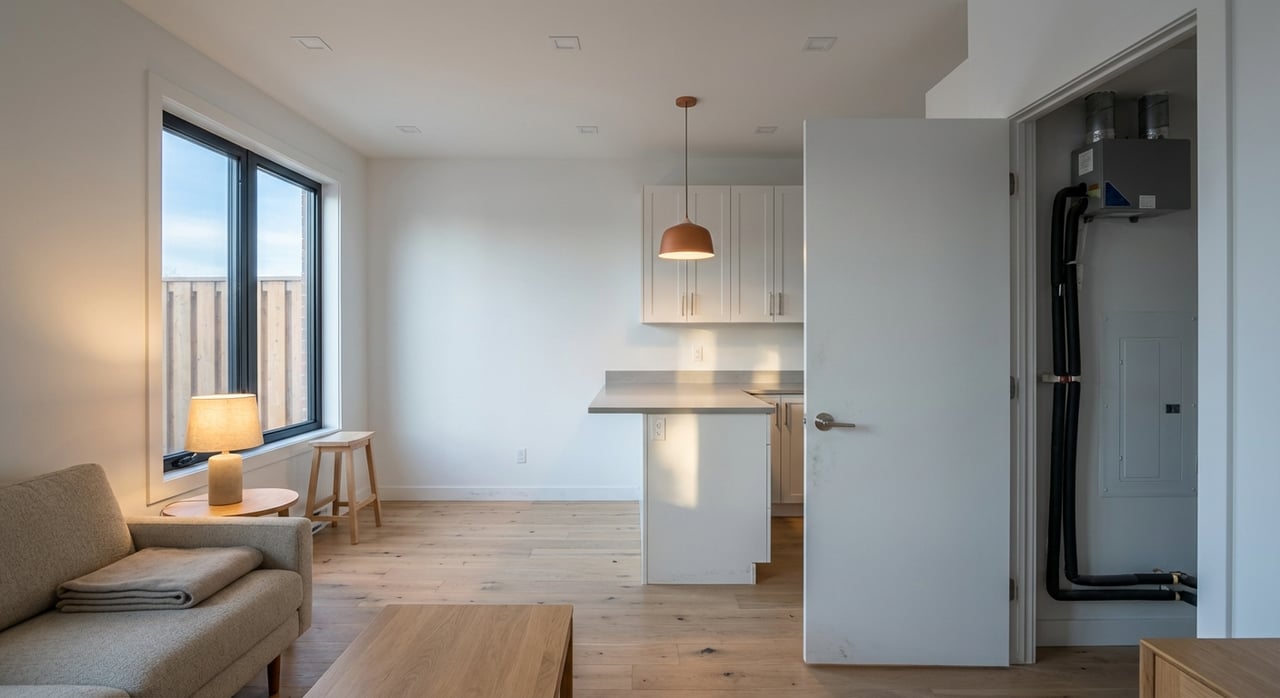
Tighter buildings need balanced ventilation to stay healthy. Ask whether the condo has an HRV or ERV, and confirm bathroom and kitchen exhaust vent outdoors. Proper ventilation supports better indoor air quality and allows air sealing to work as intended.
Lighting, appliances, and controls
LED lighting, ENERGY STAR appliances, and simple thermostat controls are low‑cost ways to trim bills. These upgrades are common in certified projects and make day‑to‑day living more comfortable and predictable.
Incentives for Portland condos
Maine’s incentives are strong right now, but rules vary by building type and income. Here is how they usually apply to condos:
- Small, owner‑occupied units often qualify for Efficiency Maine’s residential heat pump rebates. Read the current terms to confirm the owner‑occupant requirement and eligible equipment.
- Buildings with 3 or more units or commercial meters may be routed to the Commercial and Industrial path. Associations and owners can review Efficiency Maine’s C&I prescriptive incentives to see what fits their building.
- Maine is also deploying federal Home Energy Rebate funds that target income‑eligible households and some multifamily projects. Details and eligibility differ from ongoing state programs. You can read the state’s announcement on Maine’s Home Energy Rebate program.
Most rebates require registered installers. You can search for vetted contractors through Efficiency Maine’s vendor locator, and ask vendors about experience with condo and HOA approvals in Portland.
Note on timing: Program rules and amounts change. As of February 2026, verify current eligibility and application steps on Efficiency Maine’s pages above, and confirm any solar or interconnection questions with CMP and the Maine PUC.
Solar and storage basics for condos
Rooftop solar on a condo depends on roof ownership, structure, shade, and HOA approval. It also depends on how your building allocates energy credits. Maine’s compensation rules for exported solar have shifted in recent years. If a listing claims specific solar savings, verify assumptions with current utility and state documentation, and review recent reporting like Maine Public’s coverage of subsidy changes. For address‑specific procedures and data access, check CMP’s guidance.
Due diligence checklist
Use these requests during your offer and contingency periods to confirm efficiency and operating costs.
Documents to request
- Twelve months of utility bills for the unit and, if master‑metered, the HOA’s utility invoices and the allocation formula.
- Full HOA packet: declaration, bylaws, house rules, recent meeting minutes, current budget and reserve study, insurance certificate, and any energy audits or retrofit contracts. Maine’s Condominium Act requires associations to retain and provide records for owner review. See the record‑access requirements in §1603‑118.
- Any warranties, vendor reports, or certifications that document upgrades.
Questions for the listing agent
- “Is the unit individually metered for electricity, water, heating, and hot water? Can you share 12 months of bills or the HOA’s invoices and allocation?”
- “What is the heating and hot water setup? If heat pumps are present, when were they installed and by whom?”
- “Have there been recent capital projects or planned assessments? Please share the latest minutes and reserve study.”
- “Does the HOA allow exterior condensers, wall penetrations, or roof‑mounted equipment for heat pumps?”
Tasks for your inspector
- Identify system types, ages, and condition, and run a combustion‑safety check if there are fossil‑fuel appliances.
- Check insulation levels and air‑sealing at accessible areas, and look for drafts or moisture staining.
- Confirm ventilation: bathroom and kitchen exhaust, HRV or ERV if present.
- Note electric service capacity and panel space if you plan to add heat pumps or EV charging.
Questions for the HOA or property manager
- “Please provide the last three years of financials, the current budget and reserve study, recent minutes, vendor contracts, and any energy audits or retrofit proposals, consistent with Maine Condominium Act record‑access rules in §1603‑118.”
- “Has the association evaluated converting to heat pumps or adding solar? If so, what is the plan and cost estimate?”
Red flags and green flags
Red flags
- Master‑metering without a clear allocation formula and no reserve fund detail.
- Aging central boilers or tanks with incomplete maintenance records.
- Large recent special assessments or unclear capital plans.
- Covenants that forbid exterior mechanicals, which can block heat pump installations.
Green flags
- Documented upgrades like insulation, windows, or a central system conversion to heat pumps.
- A current reserve study and clear capital plan.
- Energy audits on file and a written policy allowing exterior condensers.
- Recent, permitted unit‑level heat pump installs.
Smart search tips in Portland
- Use keyword filters like “heat pump,” “mini‑split,” “ERV,” “HRV,” and “LED.”
- Compare HOA fees to listed utilities. “Utilities included” can be a hint that the building is master‑metered.
- Look for recent renovation tags and the year built to estimate likely envelope performance.
- Ask your agent to pull 12 months of utility data and to confirm whether “heat pump present” also means it is the primary heat source.
Next steps
If you want a low‑maintenance condo that is comfortable year‑round and easier on your wallet, a little due diligence goes a long way. Focus on metering, envelope, and heat pump readiness, then use Maine’s incentives to make smart upgrades after closing.
Ready to find the right fit in Portland or nearby communities? Connect with Waypoint Brokers Collective to tour energy‑savvy options, clarify HOA policies, and line up vetted installers. Find your better way home.
FAQs
What should I check first to confirm an efficient Portland condo?
- Start with metering and primary systems. Verify whether the unit is individually metered, ask for 12 months of bills, and confirm if heat pumps provide the main heating and cooling.
Are heat pumps reliable for condos in Maine winters?
- Yes, modern cold‑climate models are designed for low temperatures and are widely used in the Northeast. See context in NEEP’s guidance.
Which Portland condos qualify for Maine rebates?
- Owner‑occupied units in small buildings often qualify for Efficiency Maine’s residential heat pump rebates; larger buildings may use C&I prescriptive incentives.
How do I handle solar in a condo association?
- Confirm roof ownership, structural capacity, and HOA rules, then verify current compensation and interconnection steps with the utility. Review recent reporting like Maine Public’s solar coverage.
What HOA records am I entitled to see in Maine?
- Under Maine’s Condominium Act, associations must retain and provide records for owner review. Ask for budgets, reserve studies, minutes, and vendor contracts per §1603‑118.