Trying to choose the right part of Falmouth can feel harder than deciding whether Falmouth is the right town at all. If you are drawn to the coast, want an easier commute, or need more space without leaving Greater Portland behind, the options can start to blur together fast. This guide breaks Falmouth into the neighborhood patterns everyday buyers actually care about, so you can compare lifestyle, price range, and daily logistics with more confidence. Let’s dive in.
Why Falmouth feels so varied
Falmouth sits just north of Portland on Casco Bay and has about 12,919 residents. The town says it stretches from the coastline to more rural inland areas, and that mix shows up clearly once you start touring homes. Instead of one uniform housing market, you get a handful of distinct pockets with different tradeoffs.
Falmouth also developed in a road-oriented, suburban pattern. Commercial activity concentrated along Routes 1 and 100, more multi-family and condominium housing took shape on the east side, and western sections saw more single-family spread over time. For you as a buyer, that means neighborhood choice often comes down to how you want to balance access, maintenance, land, and price.
School logistics matter differently here
One useful thing to know early is that Falmouth Public Schools operates three buildings on one 125-acre campus near the geographic center of town. Falmouth Elementary, Falmouth Middle, and Falmouth High School are all on that shared campus. That setup can simplify school assignment questions compared with towns where schools are spread out.
In practical terms, neighborhood choice in Falmouth often affects bus rides, commute patterns, and after-school logistics more than which school you would attend. The town’s average travel time to work is 22.6 minutes, and local road access matters a lot. East-side locations connect more directly to Route 1, I-295, and the Cumberland line, while west-side neighborhoods tie more closely to the Turnpike and the Falmouth Spur.
Falmouth’s three main buyer buckets
If you want a simple starting point, most buyers can think about Falmouth in three broad categories:
- Coastal premium and water access in Foreside, Underwood, and Town Landing
- Convenience and lower-maintenance living in Central Falmouth, Pleasant Hill, and along Route 1
- Space, privacy, and trail access in West Falmouth, Blackstrap, Gray Road, Longwoods Road, and North Falmouth
That does not mean every home fits neatly into one box. It does mean your search gets easier when you first decide which lifestyle matters most to you.
Foreside and Town Landing
Where the coastal feel is strongest
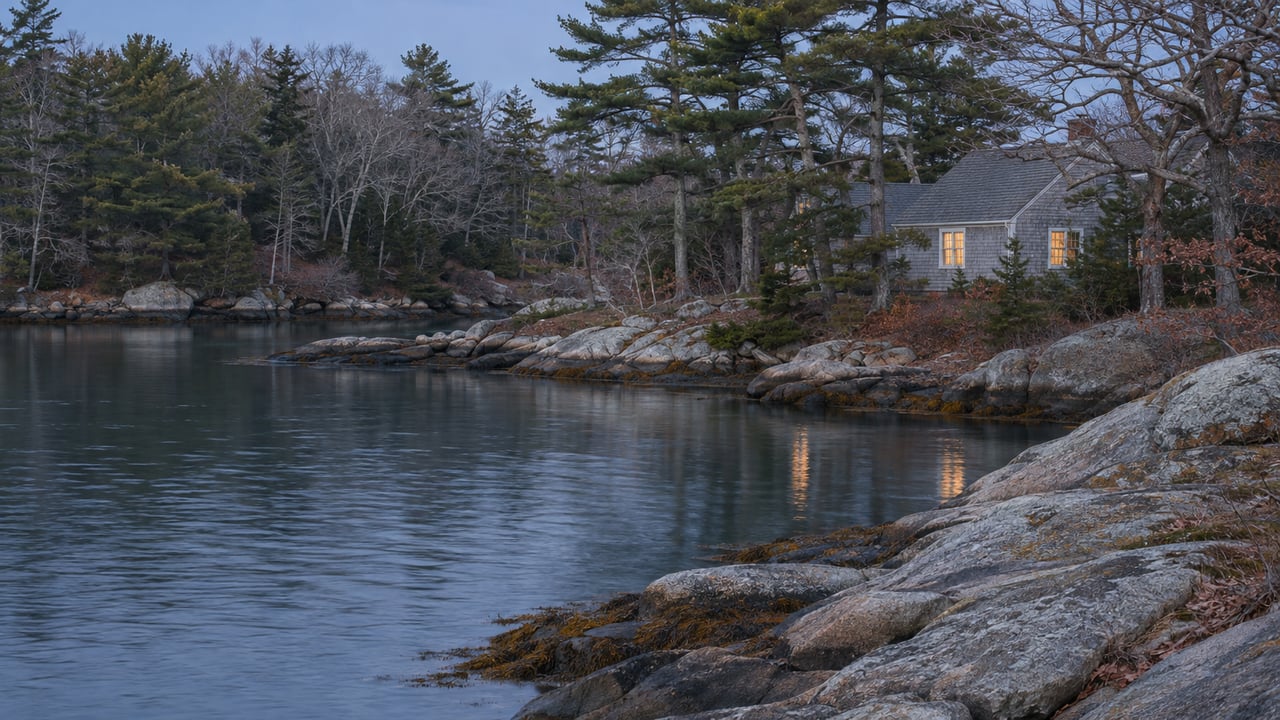
The east side of town is officially described by the town as Falmouth Foreside, running along Foreside Road from the Route 1 intersection to the Cumberland line. Town Landing sits at the end of Town Landing Road off Foreside Road, and Underwood Park is also along this corridor. If you picture the classic coastal side of Falmouth, this is usually what people mean.
This pocket is most closely associated with bay access, scenic water views, and an established waterfront feel. It also carries some of the clearest pricing premiums in town. For many buyers, the appeal is not just the house itself but the setting and sense of place.
What pricing looks like here
Current market examples show how strong that premium can be. Redfin’s Falmouth Foreside market page showed a March 2026 median sale price of $1.8 million. Townwide listing examples also included homes such as 59 Underwood Road at $1.595 million, 93 Foreside Road at $1.765 million, and 53 Waites Landing Road at $1.935 million.
That does not mean every home in this area will fall into the same range. It does mean buyers looking here should expect fewer value-oriented options and more competition for well-located coastal properties. If your budget is flexible and your top priority is a water-oriented setting, this is usually the first area to study.
Who this area tends to fit
Foreside, Underwood, and Town Landing tend to fit buyers who care most about coastal character and proximity to the bay. You may be willing to trade a lower price point or a larger inland lot for that setting. If that sounds like you, narrowing your search here can save time.
Central Falmouth and Pleasant Hill
Where practicality and access meet
Central Falmouth is often where neighborhood living and commuter convenience overlap. Fire District 2 begins at Route 1 on the Portland line, stretches west to Woodville Road, and includes Pleasant Hill plus both I-295 and the Falmouth Spur. If you want to stay connected to Portland and the broader road network, this area often rises to the top.
The housing pattern here reflects how the town grew. Sewer collection and treatment supported a 1970s boom in multi-family housing on the east side, including several larger condominium projects, while Routes 1 and 100 drew major non-residential development. As a result, this part of Falmouth often offers more variety in home type than buyers expect.
What kinds of homes you may find
The current inventory mix helps show that range. Recent Redfin examples included 3 Marshall Drive units at $378,000 and $425,000, 58 Allen Avenue Extension at $799,900, 267 US Route 1 units at $899,000 and $1.112 million, and 20 Babbidge Road at $1.175 million. Those examples suggest this area can offer both attached housing at lower price points and larger homes at much higher prices.
Townwide data also shows how tight the market is overall. Zillow listed a typical home value of $888,727, a median list price of $1,190,817, and only 27 homes for sale, while Realtor.com showed 46 for-sale properties and a median list price of $1.09 million. In a market like that, flexibility on style or exact location can make a real difference.
Why many buyers start here
For buyers who want a practical compromise, Central Falmouth and Pleasant Hill often make sense. You are closer to the school campus, major roads, and everyday services, and you may see more lower-maintenance condo or townhome options than in the coastal pocket. If you want a simpler day-to-day routine without leaving Falmouth, this is often the easiest place to begin.
West Falmouth and North Falmouth
Where Falmouth feels more wooded
Move inland and the feel changes. West Falmouth and the areas around Blackstrap, Gray Road, Longwoods Road, and North Falmouth are generally more wooded and lower density. The town says single-family homes have spread in the western sections in recent decades, which helps explain why this side of town often feels more spacious.
This part of Falmouth also offers a stronger connection to open land and trails. Blackstrap Hill Community Forest and Preserve sits between Blackstrap Road and the Maine Turnpike with nearly 520 acres and more than nine miles of trails. If outdoor access matters to your daily routine, that can be a meaningful lifestyle factor.
The price range can be surprisingly broad
The inland and western sections are not one-note. Recent Redfin examples included 408 Gray Road at $450,000, 91 Blackstrap Road at $615,000, 448 Blackstrap Road at $1.675 million, 142 Longwoods Road at $1.999 million, and 440 Blackstrap Road at $2.6 million. That is a wide spread, and it tells you something important.
Yes, this side of town can offer comparatively lower entry points than the coastal pocket. At the same time, it also includes larger-lot and luxury homes well into seven figures. If you want more privacy or land, your budget may still need to stretch depending on the property.
Why buyers choose this side
West Falmouth, Blackstrap, and North Falmouth often appeal to buyers who want privacy, a more suburban-to-rural feel, or easier access to trails and open space. North Falmouth also has a historic village identity dating back to the mid-1700s. If your ideal home feels tucked away rather than close to the busiest roads, this part of town is worth a close look.
How to match your budget to the right area
A simple shortlist can help you avoid touring homes in the wrong pocket.
| Buyer priority | Areas to explore | Current example range |
|---|---|---|
| Coastal setting and water access | Foreside, Underwood, Town Landing | About $1.6M to $2M+ |
| Convenience and lower-maintenance living | Central Falmouth, Pleasant Hill, Route 1 corridor | High $300Ks to $1M+ |
| Space, privacy, and trail access | Blackstrap, Gray Road, Longwoods Road, North Falmouth | About $450K to $2.6M |
These are not fixed boundaries, and active inventory changes quickly. Still, this framework gives you a realistic way to align your budget with the kind of daily life you want.
What everyday buyers should remember
The biggest takeaway is that Falmouth is not just one market. It is an expensive, low-inventory town with real differences between its coastal, central, and inland pockets. If you start with your lifestyle priorities instead of just square footage, you will usually make better decisions faster.
In many cases, the core choice is not about school assignment. It is about whether you want coastal prestige, commuter convenience, or more land and privacy. Once you know which of those matters most, your search becomes much more manageable.
Buying in a town like Falmouth also benefits from a close read on housing type, road access, and long-term operating costs, especially when you are comparing condos, older homes, and newer single-family properties. If you want local guidance that is practical, grounded, and tailored to how you actually live, Waypoint Brokers Collective can help you find your better way home.
FAQs
What is the most coastal part of Falmouth for homebuyers?
- Foreside, Underwood, and Town Landing are the parts of Falmouth most associated with bay access, water views, and an established waterfront feel.
What part of Falmouth may offer condos or lower-maintenance homes?
- Central Falmouth, Pleasant Hill, and the Route 1 corridor tend to offer more attached housing and condo-style options than the coastal pocket.
What areas of Falmouth feel more private or wooded?
- West Falmouth, Blackstrap, Gray Road, Longwoods Road, and North Falmouth generally feel more wooded and lower density, with stronger access to open space and trails.
How expensive is the Falmouth housing market overall?
- The research report shows a high-cost, limited-inventory market, with townwide figures including a typical home value of $888,727, a median list price of $1,190,817, and between 27 and 46 homes for sale depending on the source.
Does neighborhood choice affect school assignment in Falmouth?
- Falmouth Public Schools operates its elementary, middle, and high school buildings on one central campus, so neighborhood choice tends to affect transportation and daily logistics more than school assignment itself.
What should buyers focus on first when choosing a Falmouth neighborhood?
- Start by deciding whether your top priority is coastal access, commuter convenience, or more land and privacy, because that choice will narrow the right part of town quickly.