Curious if a heat pump will actually pay off in South Portland? With long, cold winters and a lot of older homes, it is a smart question. You want comfort, manageable bills, and a system buyers will value when it is time to sell. In this guide, you will see how cold-climate heat pumps perform here, how to compare costs against oil or gas, what rebates are available, and how to document upgrades for resale. Let’s dive in.
Heat pumps in South Portland: what to expect
South Portland winters bring frequent freezing days and occasional deep cold. Modern cold-climate heat pumps are built to deliver useful heat well below freezing, but output and efficiency drop as temperatures fall. That means proper sizing and controls matter, and many homes keep backup heat for the coldest hours.
What cold-climate means
Cold-climate air-source heat pumps use advanced refrigerants, compressors, and controls to hold capacity at low outdoor temperatures. Efficiency is measured by COP (coefficient of performance) and seasonal metrics like HSPF2. As a rule of thumb, COP often ranges from about 2.0 to 3.5 across the season, higher in mild weather and lower in deep cold. For fundamentals, see the U.S. Department of Energy’s Energy Saver guidance on heat pump systems at energy.gov.
Real-world performance in winter
In many Greater Portland homes, a properly designed cold-climate heat pump can cover most of the heating season, often 70 to 90 percent. During the coldest snaps, you will see longer runtimes and lower output per kilowatt-hour. Many households use a backup strategy such as electric resistance, an existing oil burner, or a dual-fuel gas furnace. In older, draftier homes, insulation and air sealing improve comfort and reduce electric use.
Operating cost: quick math you can use
You do not need a lab to estimate operating costs. Use this simple method to compare a heat pump to oil or natural gas.
Step-by-step method
- Estimate annual heat demand for your home. If you do not have a load calculation, use past fuel bills to approximate annual usage.
- Note your current system efficiency. Typical AFUE ranges: oil 0.75 to 0.85, natural gas 0.80 to 0.95.
- Choose energy prices. Use current local figures for electricity and fuel. For context on Maine energy prices and trends, see the U.S. Energy Information Administration at eia.gov.
- Pick a conservative seasonal COP for a cold-climate heat pump. A range of 2.2 to 3.0 fits Maine conditions for many homes.
- Compute delivered cost per unit of heat and scale by annual demand. Helpful conversions: 1 kWh equals 3,412 BTU. 1 MMBtu is 1,000,000 BTU. Heating oil has about 138,000 to 139,000 BTU per gallon before efficiency losses.
Example for a typical older home
Assume a medium-size, older South Portland home needs about 60 MMBtu of heat per year. Prices and performance ranges below are illustrative.
- Oil furnace at AFUE 0.80. Gallons per MMBtu is roughly 9.0. At $3.50 per gallon, cost is about $31.50 per MMBtu. At $4.50 per gallon, cost is about $40.50 per MMBtu.
- Heat pump at seasonal COP 2.5. Electricity per MMBtu is roughly 117 kWh. At $0.20 per kWh, cost is about $23.40 per MMBtu. At $0.26 per kWh, cost is about $30.42 per MMBtu.
- Scaling to annual costs at 60 MMBtu: oil at $3.50 per gallon totals about $1,890 per year. A heat pump at $0.22 per kWh and COP 2.5 totals about $1,544 per year. That is roughly $350 in annual savings in this scenario.
What does this mean for you? A modern heat pump often beats oil on cost in Maine, but results depend on your actual electricity rate, the system COP achieved in your home, your building envelope, and whether you still burn some oil on the coldest days.
What if you have natural gas?
Some South Portland neighborhoods have gas service, some do not. Where gas is available, delivered cost per MMBtu is often competitive. Many households choose a dual-fuel setup, using a heat pump for most of the season and a gas furnace for the coldest hours. For a true comparison, plug your actual gas rate and furnace AFUE into the method above.
Rebates and tax credits in Maine
Maine makes heat pumps more affordable through Efficiency Maine programs. Amounts and rules change, so always confirm current details on Efficiency Maine’s website.
How to qualify and document
Most residential rebates require installation by a participating contractor. Keep organized records. Typical documentation includes:
- Installer invoice with make, model, and serial numbers, installation date, and license details
- Rebate application and any required inspections
- Income proof if applying for income-qualified incentives
- Manufacturer specification sheet with performance ratings
You may also be eligible for federal tax credits under recent federal laws. Confirm current year eligibility with IRS guidance or a tax professional.
Where to start
- Explore current residential heat pump rebates, income-qualified programs, and weatherization incentives at Efficiency Maine.
- Look for contractors listed in Efficiency Maine’s trade ally network.
- For technical deep dives on cold-climate performance, see resources from Northeast Energy Efficiency Partnerships at neep.org.
Installation tips for South Portland homes
South Portland housing spans older wood-frame houses, multifamily buildings, and newer infill. Design choices should fit the home and neighborhood context.
Sizing and design
- Ask your installer for a Manual J load calculation, not a rule-of-thumb estimate.
- Consider pairing the project with air sealing and insulation. A tighter envelope lowers your required capacity and improves comfort.
- Plan for a backup strategy for very cold hours if needed.
Ductless vs. ducted
- Ductless mini-splits are great for zoned control and homes without existing ductwork. They are visible indoors and easy for buyers to spot on tours.
- Ducted systems work well if you already have ducts or prefer a central system aesthetic.
- Multi-zone setups can serve multiple floors or wings common in New England homes.
Electrical and permits
- Many installs need dedicated circuits and sometimes a panel upgrade from 100 amps to 200 amps. Confirm electrical capacity before you buy equipment.
- Your installer typically secures local permits. If you plan to decommission an oil tank, ask about any required permits or inspections.
Placement and noise
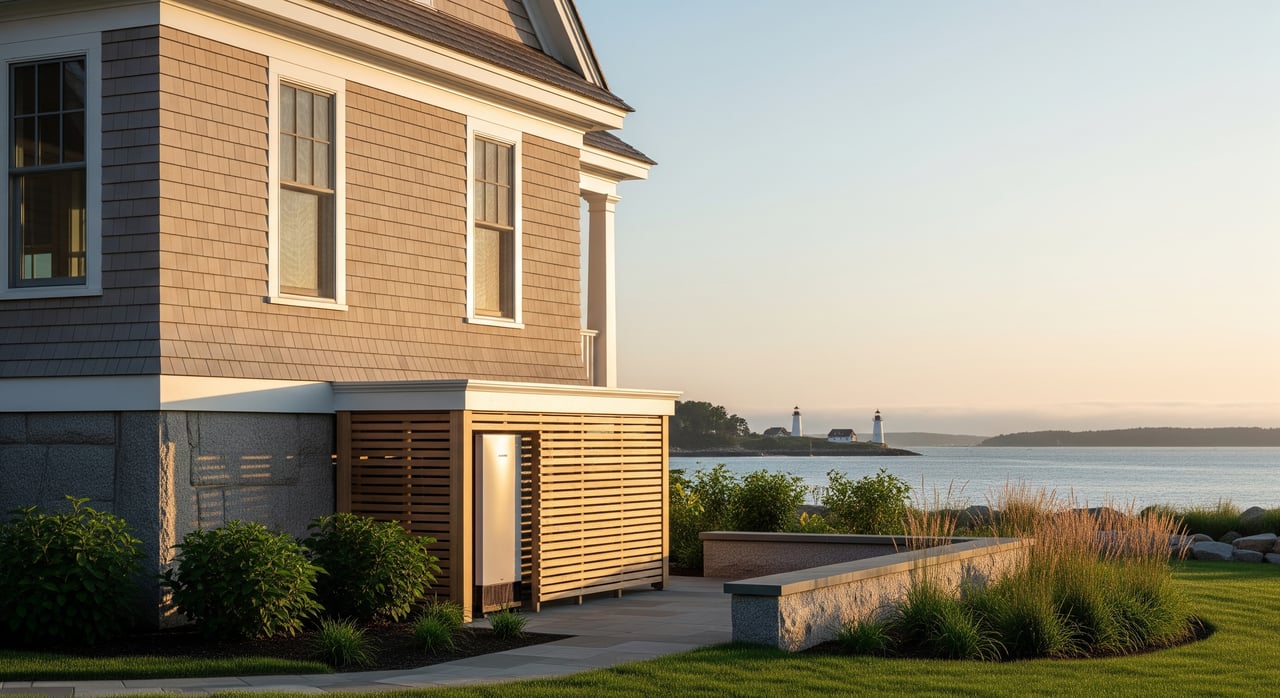
- Outdoor unit placement affects noise, snow exposure, and curb appeal. In tighter neighborhoods, discuss setbacks and neighbor proximity with your contractor.
Choosing a contractor
- Prioritize contractors certified by Efficiency Maine or with manufacturer training for cold-climate equipment.
- Request these deliverables: Manual J and Manual S, equipment spec sheets, commissioning and start-up report, and a maintenance plan.
Resale value: how to make it count
Buyers in oil-heated markets notice lower projected heating bills, summer cooling, and fewer onsite combustion appliances. Removing an oil tank is often seen as a plus. A well-designed heat pump upgrade can support a smoother sale, especially when you make the value visible.
What buyers notice
- Potentially lower heating bills compared with oil
- Quiet comfort and zoned control, plus built-in air conditioning
- Newer, modern equipment and clean mechanical spaces
What appraisers need
Appraisers rely on local comparable sales to recognize value. The more objective documentation you provide, the better. Include:
- Signed installation invoice with model and serial numbers
- Manual J and sizing documentation
- Commissioning report and manufacturer performance sheets
- Efficiency Maine rebate confirmation
- Home Energy Score or similar audit results
- Before-and-after utility bills if available
- Warranty transfer and service records
- Oil tank removal or abandonment paperwork if applicable
Seller checklist
- Improve the building envelope first if possible. It reduces operating costs and helps sizing.
- Use a reputable, documented installer. Keep all paperwork together in a simple “energy upgrades” packet.
- Create a one-page summary with conservative annual savings estimates and system details to share with buyers and appraisers.
Bottom line for South Portland
A properly sized cold-climate heat pump can cover most of your heating season, cut oil use, and add cooling. Against typical oil prices, it often lowers annual costs, though results vary with electricity rates, COP, and home efficiency. If you plan to sell, strong documentation and a clear story about comfort and operating costs help your upgrade show up in the value.
Ready to weigh costs and resale tradeoffs in your neighborhood or compare homes with and without heat pumps? Reach out to the team at Waypoint Brokers Collective for local, sustainability-minded guidance.
FAQs
Do heat pumps work in South Portland’s cold snaps?
- Yes. Cold-climate models are designed for subfreezing temps, but capacity and efficiency drop in the coldest hours, so many homes keep a backup heat source.
How much can I save versus oil heat?
- In an illustrative case using 60 MMBtu per year, a heat pump at COP 2.5 and $0.22 per kWh can save roughly $350 per year versus oil at $3.50 per gallon. Your results depend on prices, COP, and your home’s efficiency.
Should I keep my existing furnace or boiler as backup?
- Many South Portland homes keep a dual-fuel or backup setup for the coldest hours. This can improve comfort and manage operating costs when temperatures plunge.
What rebates are available in Maine right now?
- Efficiency Maine offers residential rebates, with higher amounts for income-qualified households and paired weatherization work. Check current rules at Efficiency Maine.
What paperwork helps an appraiser value my heat pump?
- Provide the install invoice with model and serial numbers, Manual J and sizing docs, commissioning report, manufacturer specs, rebate confirmation, energy scores, utility bills, and any oil tank removal paperwork.
Will I need an electrical panel upgrade?
- Some systems require new dedicated circuits and sometimes a panel upgrade from 100 amps to 200 amps. Have an electrician or your installer assess your service capacity early.